If you do not follow me on social media (X, LinkedIn), you likely have missed the different work I have been up to. So this is a remix of some of that, posted here for folks to follow along.
Crime De-Coder Blog
On the Crime De-Coder Blog:
- Notes on Crime Trends in the US
- Architecture Notes on VerusCite
- Filtering Secrets from Coding Agents with a Hook
I often debate whether to post things here or on the Crime De-Coder blog. So if you like my posts here, you should probably also follow Crime De-Coder. As you can see, it is a mix of recent technical and crime-analysis-related posts.
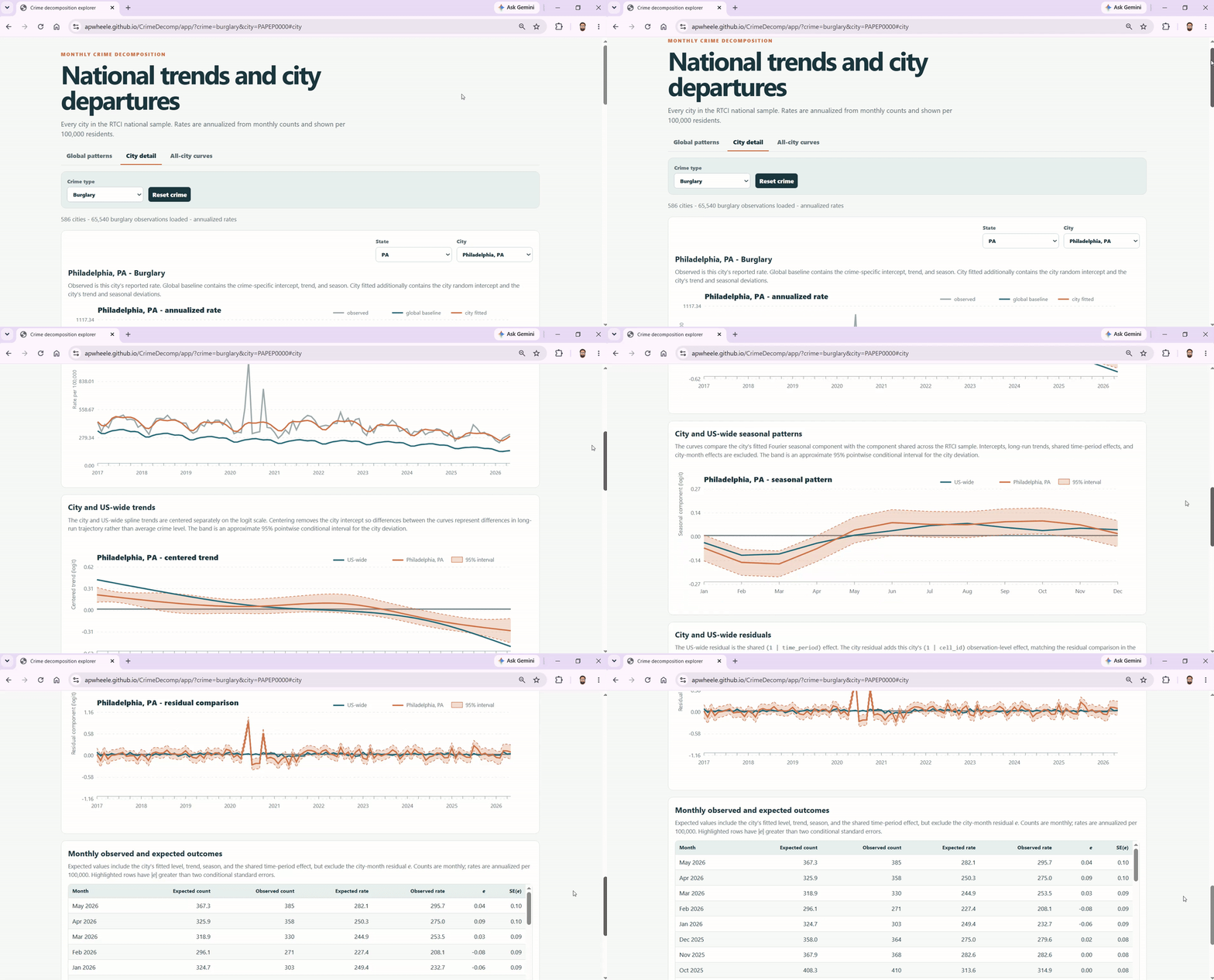
For the crime trends work, also check out my web app, where you can filter and compare cities relative to national trends (based on the Real-Time Crime Index data).
Note that I will be going to the Council on CJ working group on crime trends, on the causes of the homicide decline, in a few weeks, so let me know if you want to meet up.
VerusCite Updates
This is a newer one, but I have created a blog on VerusCite as well. Recent posts include:
- Why I don’t use Google Scholar in VerusCite
- A Deep Dive into Hallucinated Citations: DeepMind Paper Edition
And I have also made a Hall of Hallucinations, where I am putting my “hallucination of the day” articles moving forward.
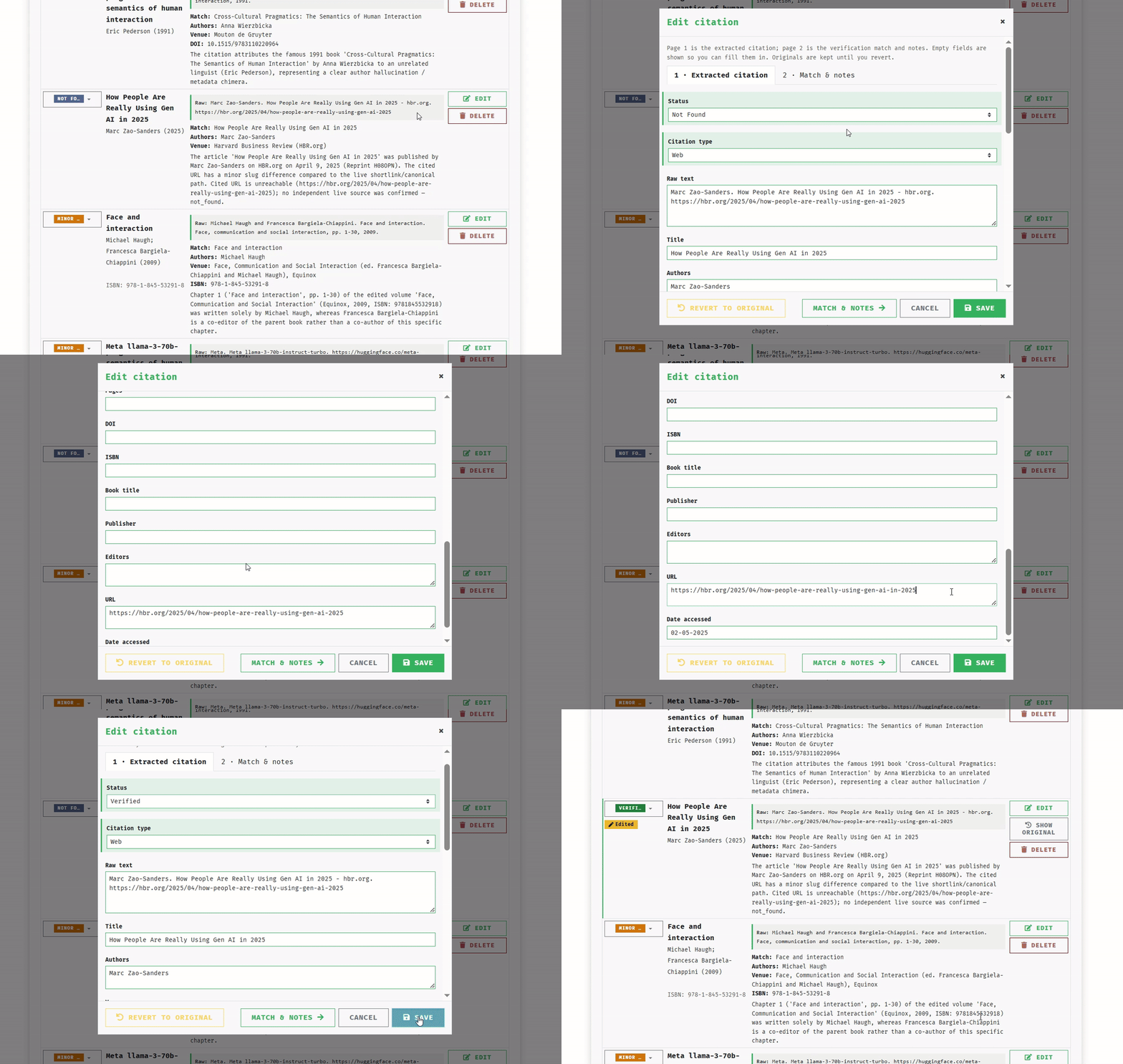
I will be making some demo videos of VerusCite in the near future, but for a sneak peek, you can see I have spent quite a bit of time on the tool’s user interface. It is really intended to be human-in-the-loop.
I particularly want to get this in front of journal editors. It is really cheap ($2 a paper). It is totally feasible for journals to spend a few dollars to prevent these embarrassing results from being published.
Interest in an Actually Private Chat App?
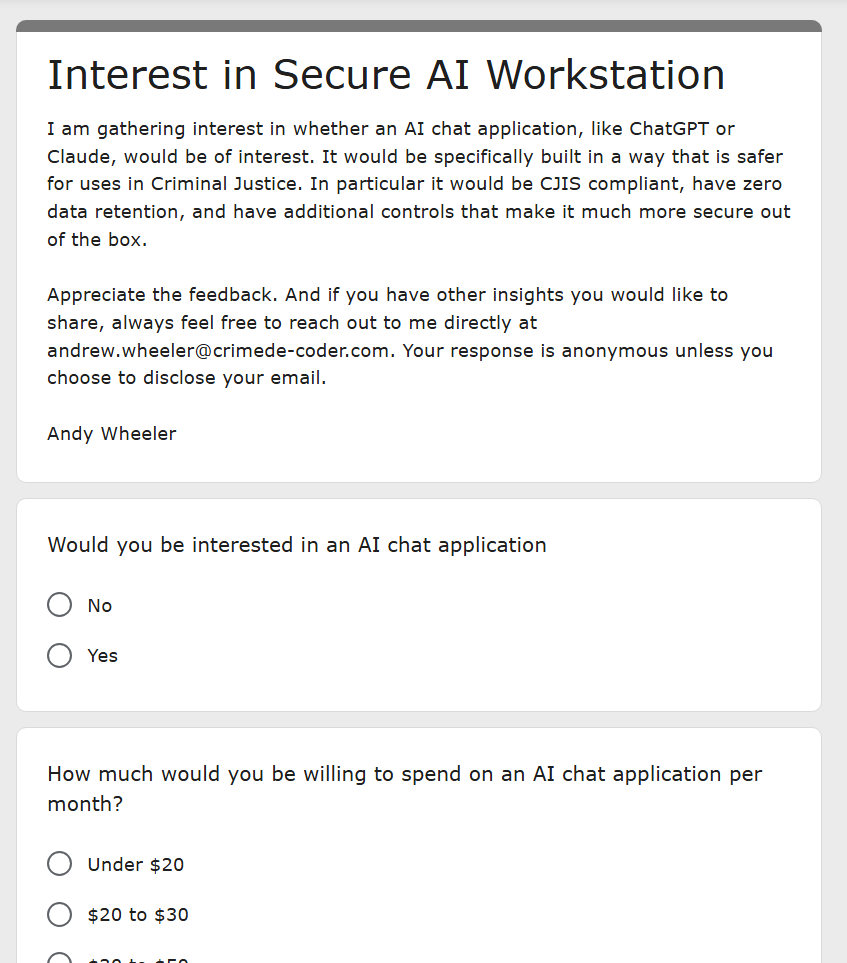
Final share today, with the news of an expert witness and their very embarrassing ChatGPT conversations coming to light, I opened up a survey to see if people are interested in an actual “safe” chat app that has zero data retention.
It used to be that if you paid for ChatGPT (or Claude), you could opt out of training. More recently, these companies have committed to retaining information for model safety, or because courts have told them they need to keep it. Mostly when calling the APIs directly, they are zero-data-retention by default (beyond a few minutes to keep the cache). So building a ZDR chat app is totally feasible.
See the survey I have opened up here, which asks if you are interested, price points, desktop/web-app, what you would use it for, etc. I do wonder if there will be more potential interest in state entities, since OpenAI and Anthropic are really dropping the ball here on whether people can trust them with sensitive information.