
For several minor updates across my different projects. One, I have updated my Crime De-Coder store where I sell my books and software. Before, it was a WooCommerce site, which worked ok (pure GUI integration). But it was time for me to upgrade and have it directly integrated into my site.

It was a WooCommerce site before, which worked ok (pure GUI integration). But it was time for me to upgrade and have it directly integrated into my site. So now it is using the direct print API from LuLu for the books, and everything else is custom PHP code. Using Opus 5.5, this was just a day of tinkering. For several coupon codes:
- LLMDEVS, $25 off LLM for Mortals epub
- TWOFOR1, $30 off if you purchase any two books
- SIXPRINT, $20 off LLM Mortals paperback
- NEWSTORE, $20 off any of my Data Science for Crime Analysis book (paperback or epub, in any language)
VerusCite is now only $1 to review a paper. Between Luna 6.0 pricing and Perplexity fast web search being cheaper, it has brought costs down far enough for me to offer it at $1 per check.

Also VerusCite has its first retraction, a paper in Policing: An International Journal. Sign up and let your editor friends know about the tool!
The Council on Criminal Justice has released their report on the expert opinions on the homicide decline. I was invited, and thought it was well run. There was not much agreement on what caused the decline (which is difficult if not impossible in noisy crime data), but there was agreement on factors that likely did not contribute to the decline. Take this example of why I think increased firearm carrying is not a likely contributor to the recent homicide decline.

If you are interested in this report, I also made two different web apps to peruse different national level crime trends (based on Jeff Asher’s real-time-crime-index sample of 500+ cities across the US). The Crime Decomposition Explorer, where you can see a single city and compare their trends to the rest of the US. Or the Synth app, where you can conduct a synthetic control estimate for a specific city, timepoint, and crime type of your choosing.
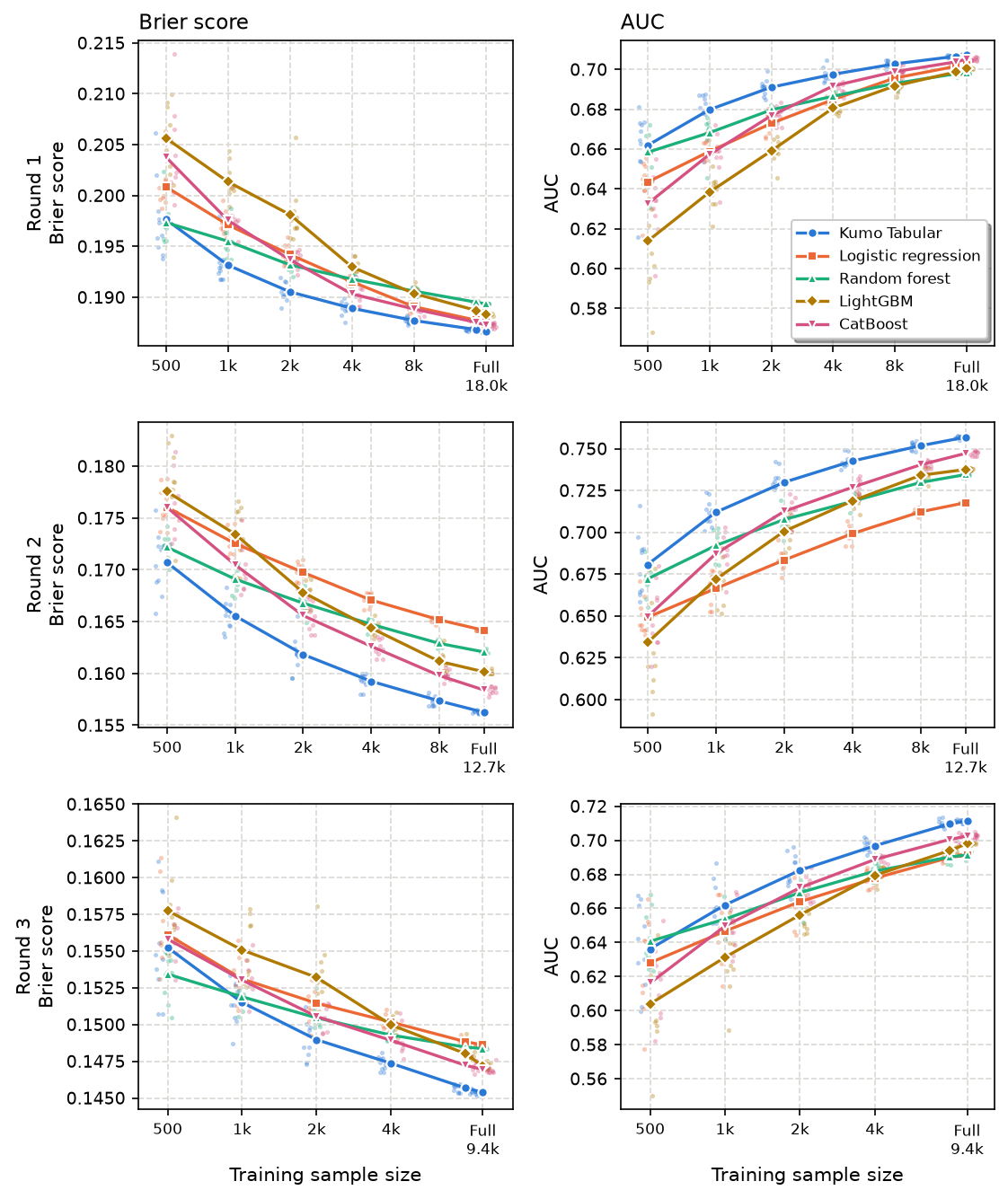
In continuing with my tests in having AI write whole papers, I have two additional ones. Using NVIDIA’s newest tabular foundation model Kumo, I show it would have done quite well in the NIJ recidivism competition without feature engineering. It basically would have placed on the large team leaderboard for the majority of the competition sub-categories.
Another AI paper is developing a spatial scan technique to choose a control area for a place based crime intervention. This is a follow up to the WDD paper I wrote with Jerry – this is a way for an analyst to have a data driven approach to choose a control area that follows similar crime trends.
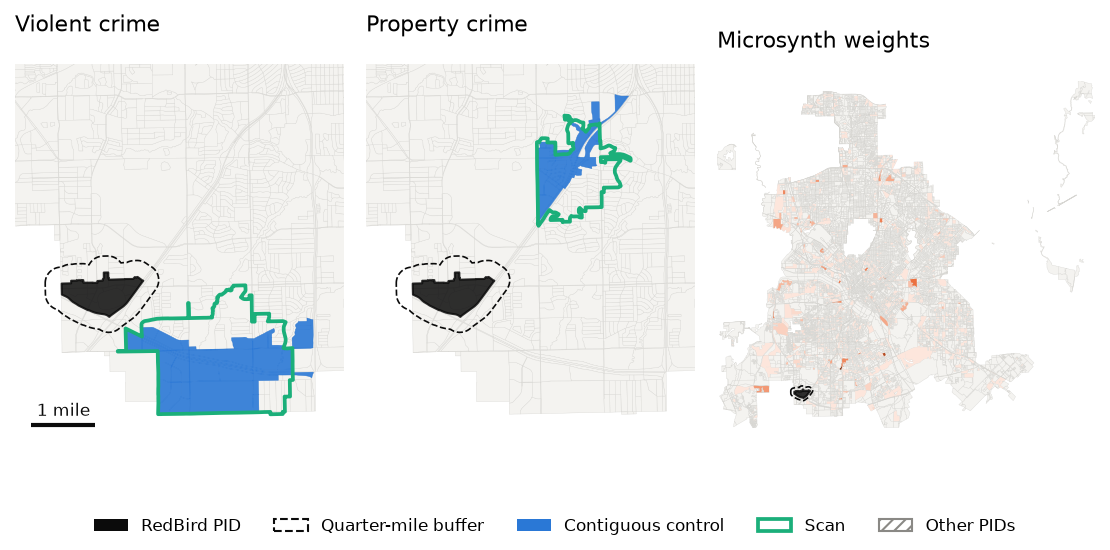
I do not like microsynth (it clearly is overfitting to the data), and in the pretty tame simulations I show the chosen control area is less biased.
I did actually have GrokBot upload one of my AI papers to crimrxiv – Fair and efficient spatial siting of public surveillance cameras. I may upload more of them at a later date, I am not 100% sure. (I am unlikely to spend the time to get them peer reviewed though; they will get more views on my blog and via crimrxiv than they would in a peer-reviewed publication.)
If you are interested in training, though, for your graduates or program, get in touch. I have been sending out emails to programs to encourage departments to pay for Python training or training on using LLMs. The current AI tools can (and should) definitely be used effectively and safely for social science research. Academics are just sticking their heads in the sand if they think AI cannot or should not be used to help with research and writing.


